Posts Tagged ‘media’

Marketing Lessons from The NFL

No Comments » Written on November 1st, 2011 by
Categories: Marketing, SEO, Strategy

The National Football LeagueWe’re halfway through the National Football League (NFL) season and this is the time of year that I love.  Temperature is cooling down, leaves are changing, Halloween, Thanksgiving and Christmas are the holidays and the NFL season is in full swing.  There’s a reason why NFL football is the number one sport in the United States, well-done marketing!  Everything you need to know about marketing can be learned from watching and studying the NFL.

Talent Acquisition

The NFL devised the draft in 1935 to acquire the top college players and have held a draft every year since 1936.  Since then it has become a prime time television event and the model for other leagues to acquire talent.  Even though there are several rounds, the first round and top dozen picks get more media attention and millions of dollars for the picks than some companies in a single year.

Branding and Merchandise

Official NFL jerseys sell from $80-150 depending on the team and player.  Watch or attend any game and you see a large portion of the fans wearing them.  Go to any sports bar on a Sunday and you’ll see even more.  In addition to jerseys, team logos appear on just about every product and each one pays a licensing fee to the NFL for the right to use or risk serious lawsuit from a team of high price lawyers and copyright infringement from the feds.

Advertising

Ads are everywhere but the uniform and the field.  The NFL knows that if they slap logos on the teams and the field of play it cheapens the game and could create backlash among fans.  Yet we see ads everywhere else and placed without all the tackiness of NASCAR and European Soccer that slap ads anywhere on the vehicle and athlete possible.

Special Events

The Superbowl, do I really need to explain this? It’s the most watch sporting event on the planet, every year.  Commercials cost a million dollars and can give you exposure for to launch a company.

Timing

Humans love routines and a consistent time and date makes it easy to build a regular routine around a sporting event.  The majority of the NFL games are played on Sunday and usually at 1 pm local time.  Even with Monday Night Football and the second-half Thursday night games, most fans get their fix starting at 1 pm on Sunday.  For the uber-fan you have primetime games on Sunday and Monday and the occasional Thursday night game.

Analysis

Instant replay was once a TV feature has now become part of the rules.  This year we see automatic review of scoring plays to eliminate error.  While I’m not a fan of instant replay as it slows the game down and takes out the human element, it is an analytical process that helps ensure accuracy.

Crisis Communications

When Hank Williams shouted Obama is a Nazi on Fox News ESPN cut the cord before the NFL had to step in. ESPN knew that the NFL does not need Hank Williams to sell MNF and realized his time had come.  Smart move and thank you!

Social Media

Early on the NFL realized that players tweeting during games would be a distraction and issued a social media policy banning tweets and social media messages starting 90 minutes before the game and lasting until after the game finishes.  Instad of waiting for an incident the NFL realized that a clear, concise policy was the best way to keep the attention on the field for players and staff.

Recognition

Only a half dozen players, coaches and contributors to the game get elected into the NFL Hall of Fame every year making it an honor and priveledge that most players aspire to.  Instead of flooding the Hall with great players, it’s reservered for the best of the best.  Wonder what it means to the inductees? Watch any induction ceremony and you’ll see a full range of emotions.

Word of Mouth

More water cooler chatter on Monday mornings is about football and specifically NFL football than any other topic on a regular basis.  How many times have you heard, “did you watch the game?” on Monday morning?


World Without Apple Infographic: Impact of Steve Jobs

No Comments » Written on October 7th, 2011 by
Categories: Infographics

The passing of Steve Jobs was a sad event for me. I bought my first Apple Macintosh computer in 1987. It was a used first generation Mac that cost me $2,300! Nonetheless I loved it, it was my first computer because the Commodore 64 I had in high school never did anything but play games. I wrote my college finals on it, got my first job because I knew how to use a Mac and then proceeded to buy several Macs, Mac IIs, iMacs, G4s, iPods, iPhones and now MacBook Pro.

I always admired Steve Jobs as the real true visionary of our generation that knew what the PC had to be in order for it to change the way we worked, lived, communicated. When Apple ousted him I was pissed. I even bought a few of the Mac clones that Jobs shut down when he came back to Apple and saved the company.  Steve Jobs always wowed me with the latest product and how it was built, marketed, designed and delivered.

So in looking at the many infographics on the web I found this infographic from Infographic Labs that shows a view of the world without Apple that shows Steve Jobs’ impact.

World Without Apple Infographic from Infographic Labs

The World Without Apple from Infographic Labs

Will Brand Redesign Bring Back Budweiser’s Customers?

4 comments Written on September 14th, 2011 by
Categories: Marketing, Strategy

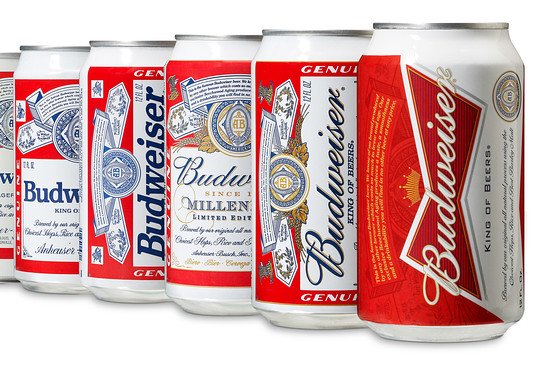
New Budweiser design and several can redesignsBudweiser announced that it is redesigning its cans. The bow tie Budweiser logo will be emphasized along with the red color. I wonder if this will attract new customers?  Sure there will be interest when the new design is seen on cans and swag, but will it last?

Overall the beer market has shrunk the past year.  People have stayed home and drank less during the recession.  Budweiser is now owned by InBev a Belgium brewer. U.S.-based sales for Budweiser dropped 7.3% in 2010, while sales for Bud Light dropped 2%, according to Beer Marketer’s Insights.

Still Bud and Bud Light are the top two beers sold in the US. A can redesign changes the packaging but how does it fit into Budweiser’s overall marketing strategy?

Bud has built the brand with aggressive advertising and promotion at national and local levels. NFL and other major sport ads provided the air cover that kept the brand fresh cool and present in consumers minds. From the talking frogs to the Wassup? guys, Bud has spent more than any other advertisers on the most expensive advertising event, the SuperBowl.

At the local level Bud has partnered with leading distributors and provided co-op dollars to sponsor local events and venues. By working with local bars and restaurants Bud and Bud Light have pushed special pricing to win sales based on price. Even the local delivery trucks have Bud splashed across the vehicle. A new brand requires some time to gel with fans while a throwback one could lead to immediate acceptance and appreciation.

Will the new design just give short term buzz and excitement about the brand yet long term sales will continue to decline? Bud has a long heritage that it could reach into. Bringing back Bud Man or some of the traditional designs could give it a more authentic nostalgic connection with consumers.  A retro design could tie in to digital media as it would allow for customers and fans to share in their memories and what they love the brand’s heritage.  Similar to how we’ve caught up with all our old high school friends on Facebook. I don’t think consumers will talk online much about the new can.

I think part of Budweiser’s redesign strategy is to attract younger customers in their 20s and 30s.  Yet the younger beer drinking public may see right through Bud’s gimmick and stick with their hipster brands like PBR or be craft beer connoisseurs. Is this Bud for you or for the rapidly changing younger generations?

History of Marketing Channels Infographic

This week’s infographic is from Penn-Olson and gives a great timeline of the history of marketing channels.  My personal introduction to this graphic starts with guerrilla marketing in college and integrated marketing communications when I started my professional career.  Since then we’ve seen an explosion of marketing channels mostly due to the Internet and web.  Click on the image to see the full size image.

History of Marketing Channels

Source: www.penn-olson.com

Surviving After Nature’s Fury

No Comments » Written on April 17th, 2011 by
Categories: Events

Watching the news and tracking the storm that tore through North Carolina yesterday reminded me about the tornado that hit Raleigh in 1988. I was in college at NC State and living off Hillsborogh St. I still recall the strange weather that day. The temperature shifted 20+ degrees and by midnight you could see storms to the north. I recall sitting on the front porch ad talking with my roommate about how weird the weather had been and how it was, “perfect tornado weather.”

That storm spawned several tornados and hit several neighborhoods in North Raleigh starting at midnight. It flattened the K-Mart on Glenwood Ave and scarred the land around Lynn and Leesville Roads. The people in those neighborhoods had very little warning and surprisingly there were few fatalities (4 total and 2 in Raleigh). I was not aware of the storms until the next morning. One of my roommates had driven back from his home in Northern Virginia for Fall Break and asked me what happened in North Raleigh. “It looked like a bomb went off out there!” he said. My only news sources at that time were television and the copy of The News and Observer that was sitting on the coffee table.

Yesterday we saw the worst tornado activity in the history of the state. After returning from my kid’s soccer games around 3:20 pm I turned on WRAL to see how the storm was tracking. Within the next five minutes they had identified a tornado in Holly Springs that was heading directly towards our location. Luckily my house has a basement and we all went there to be safe. Over the next 10 minutes, heavy wind, rain and hail hit our home and area. We were spared as the tornado that was heading toward us went more due south and directly towards Raleigh.

About 10 minutes later I saw the first image of the damage. I was checking Twitter to see what news was coming out and saw the image of the Lowe’s in Sanford flattened like the K-Mart on Glenwood 23 years ago. A few hours later I saw images of a friend’s home that was badly damage by the storm and called to make sure he was OK both physically and emotionally. He informed me that although he was a bit shaken, everyone was OK and nobody was injured.

S. Saunders St. after the tornado

S. Saunders St. after the tornado

Photo by Josh Hofer (@josh_hofer).

What resonated with me was even more relevant than it was 23 years ago, tornados and other acts of nature can destroy our homes, cars and other possessions but they are all replaceable. What really matters is our safety and mortality. When that tornado hit years ago I felt bad for those that had damage and lost their lives but did not fully understand the impact. Yesterday I felt very sad and bad for those suffering from this storm. Being homeless for any period of time sucks. I have been forced to leave my home for several weeks due to a house fire and can tell you I hated every minute of it. The safety of my family was more important to me than anything else at that moment.

I am thankful for the more immediate access to information we now have with increased communication channels and real time technology. This information helps saves lives and move people out of danger when seconds count. We spend an inordinate amount of time on Facebook, Twitter and other social networks yapping about our coffee, lunch, or whatever. Yesterday was an opportunity for people to inform, warn, reflect and share their emotions, grief and impressions of what happened to our community.

What’s really important is surviving, helping our neighbors, sharing our love and passions with those in our community. My family and I were very lucky that this storm passed by us with no damage. While others are dealing with major challenges in their lives caused by the storm, I have faith in the fact that they too will survive and continue onward. Homes will be rebuilt, possessions replaced and injuries will heal.

If you are interested in helping those in the community contact the Triangle Area Chapter of the American Red Cross at http://www.triangleredcross.org/.

Does Selling Out Kill Your Brand?

No Comments » Written on March 29th, 2011 by
Categories: Digital Media, Social Media, Strategy

MySpace RIPMySpace and FriendFeed were early social platforms that grew their community and eventually found their respective suitors.  But was acquisition the kiss of death to these companies?  It seems that after they get their payday these companies are forgotten by their new owners for several reasons.

FriendFeed was supposed to be the Twitter killer for Facebook. FriendFeed is a service which, instead of layering a meta-network on top of all your other social networks, will create a news feed incorporating them all much like the Facebook news feed.  FriendFeed was acquired by Facebook in August of 2009.

By providing a microblogging platform to Facebook, it appeared that it would compete for the 140 character crowd and challenge Twitter.  But it never happened.  In fact Facebook’s integration of FriendFeed into its status updates never materialized and unique visitor traffic to the site has dropped from 800K visitors to 200K over the past year.  With Facebook’s recent acquisition of Beluga, FriendFeed’s days may be over.

MySpace had it’s big payday with Fox. After purchasing the number one social network in 2005 for $508 million It became a lonely stepchild in the Fox family.  Once the king of the social media networks, it’s growth has declined over the past few years as Facebook’s has grown.  Recently Fox announced that it was planning on shutting Even though it has more users than Facebook, its growth has stalled and now Fox is looking to shut it down by this June.

So what happened?  First and foremost when companies get bought out for a big payday like these two there is some loss of talent via attrition.  The new owners are challenged to find new creative leaders and must integrate the new company into their corporate culture.  This was the case when Macromedia and Adobe merged, although Adobe was the larger, more established company, Macromedia’s culture became the dominating force in the new organization.  Failure to integrate properly can stifle creativity and hurt the product or service.

Another factor can be that the new owner does not understand the business model of the acquired company.  In the case of Fox they wanted to get advertising revenue but ignored the user experience and how to grow the community. As traffic to the site declined so did ad revenue.  Leaving Fox with a property that is dying.

Maybe Groupon and Facebook have the right formula.  Stay private and keep the quality of your product high and continue to evolve the user experience.

Beyond The Basics: Creating Great Short Online Video

For my third episode I travelled to Chapel Hill and met with David Rose (@dbrose67) COO of Magent Video (@magnetvideo) to talk about how to shoot short corporate video.  David and I talked about the challenges of producing a great 30-60 second video for your website that keeps your audience’s attention.  Some of the interesting tactics I learned were:

  • Keeping your script down to 150 words and clearly communicating your core message.
  • How to use analytics to see how your customers are looking at videos and then interacting with your company.
  • How and where online to manage your video library.

David’s office had some great places to shoot.  His partner has several motorcycles on display and we chose the sweet BMW in the front lobby to use as our shoot background.  Thanks again to David and Magnet for participating!

End of the Year Blog Checklist

1 Comment » Written on December 14th, 2010 by
Categories: Marketing, Productivity, Strategy

Blog Tune Up

Time for end of the year blog tune upAs the year winds down we typically find ourselves reflecting on the events of the current year as well as dealing with all those tasks we’ve put off.  Now is a great time to review your blog and perform your blog tune up to maximize performance and review any enhancements you put in place this year.

Check Your Links

We tend to add links in many areas: in posts, on pages, to our blog roll.  But have you checked those links lately to determine if they are still working?  There are many link checking tools available to see if links are broken, not resolving.  The one I use is from the World Wide Web Consortium (W3C).  It will run a comprehensive analysis of all links on the URL you enter.  If you have a large site with many links this will take some time but review the report and fix or remove any broken links.

Another blog tune up task is to check on links is your blog roll if you publish one.  You should be doing this on a periodic basis anyway, but now is a great time to verify and review the sites you have linked.  For instance is that NING community that you were active in six months ago still around?  If not, then take appropriate action to deactivate or remove is the site is inactive.  Find out now before your readers do and you lose credibility.

Review Analytics and Use for Upcoming Year Plan

If you are using Google Analytics or any other website tracking tool, take a look at the whole year and each quarter to analyze traffic and find trends.  Was March a great month for traffic and July terrible?  Was it due to end of the quarter and vacation?  Or did you publish more in March and less in July?  These questions should be asked and draw some conclusions about the data and how it related to content published and viewed on your site during the timeframe.  This information is what you need to start planning for the next year so you can potential repeat success and avoid downturns.

Talk to Your Readers

Sure we comment with readers on posts and via email newsletters, but when was the last time you polled your readers?  Take the end of the year to ask them what they liked and disliked about your site this year.  What would they like to see more and less of?  This data and feedback is crucial to your content strategy planning going forward and can be compared to your site analysis outlined above.

Clean up the Clutter

Did you add a bunch of ads, links to contests, social networks profiles, etc. during the past year?  Have they resulted in any action, revenue or something of value?  If not determine if they are worth the real estate and clean out the ones that are not providing value.  Too many blogs just keep adding and adding to the sidebars and it gets messy and distracting to your readers.

Another great task to do this year is to look at special pages you may have set up for video or other content.  Did you create a page that is now very long and lengthy?  Can the content be put into posts and grouped by category or tag so that the CMS will handle the greater amount of content?  Is it easy to find this content and should you create a unique menu heading for it?  These are some of the questions you need to ask yourself when reviewing your site.

Update your Tools

If you did add any special functionality to your site like an image gallery or a web application does it need to be reviewed and updated?  Does the data need to be backed up and archived?  If you’re not backing up your site the end of the year is a great time to do this and save the backup data to an offline storage device like a DVD or CD for safe keeping.  If you have not updated your CMS and its associated tools, plug-ins, themes, templates, etc. you need to perform a thorough backup and then start upgrading.

Now you have some blog tune up tasks, have they worked for you?

The “What” is Twitter

10 comments Written on June 30th, 2010 by
Categories: Digital Media, Social Media

Is this the future of newspapers?Last year I wrote a blog post about why I stopped subscribing to the daily newspaper. Only a year of time has passed but it seems like 5 years have passed since then. In my post I asked “now what?” Well in that time I’ve found that the answer to that is Twitter.

I frequent Twitter more often than Facebook or LinkedIn on a daily basis for a few reasons. The first being that it’s easy to scan Twitter streams, much like newspaper headlines. I’m a big scanner and I tend to search for keywords that spark my interest. Of course the downside to this is I sometimes miss information but so does everyone else. But for the most part I click through to articles of interest to read and sometimes share.

Second is the ability to group content using Twitter lists. I group my lists much like the sections of the paper: local news, sports, entertainment and national news feeds. I also have a group of approximately 200 local people that I follow on a regular basis. Once you get over 150+ friends it’s too much data to track on the main feed. Segmentation is key. And I’m a local news junkie in that I’m more interested in what’s going on in my area and the local people making news. Twitter allows me to keep abreast of what’s happening in my community.

Third is that Twitter is real time. Gone are the days of getting yesterday’s news in today’s paper and catching a 20 minute recap of national nightly news. I do miss CNN Headline News when they did the 20 minute recap all day long. Now CNN is like a bad cable reality show of people trying to make news interesting. Just the facts please, no need to entertain me I want to be informed. If the story is big it will be retweeted to death and that gets my attention even if I’m offline for a period of time.

Now I would only be telling part of the story if I did not state that some of the Twitter feeds that I follow are newspapers and news organizations. As these media companies have started using social media sites, it allows us as consumers to continue our relationship with the media outlets that we’ve known and trusted for so many years.

I also want to point out like I did in my post last year that part of me feels empty with newspapers dying. For one I know that many journalists and newspaper staff do it for their love of reporting, writing and publishing. Newspapers were never the wealthy choice of communication professionals. So to those that have seen their industry shrink yet still work hard to be their reader’s advocates and report the facts you have my greatest respect.

Do you still subscribe to the daily newspaper? If not how do you get your news and information?

BP PR Campaign: Right or Wrong Timing?

11 comments Written on June 9th, 2010 by
Categories: PR, Social Media, Strategy

BP unveiled a new multi million dollar PR campaign this past week. I first saw the commercial while watching the morning news and watched with great interest. First as a US Citizen I wanted to know what this European based company was doing to clean up the worst natural disaster in our country’s history. I have family that lives in that part of the country and I felt a bit snarky when BP’s CEO Tony Hayward said they would take care of all the problems and he’s sorry that it happened.

Even President Obama said that BP should be spending more on the clean up than on a PR campaign. However would his opinion be different if he was a PR person? I mean we keep telling everyone how this new social media channel allows us to have a conversation and that companies need to communicate to us and not just sell us goods and services? Recent case studies I’ve read about companies doing it wrong continually point out that some companies react and stop the communication in fear of inflaming a difficult situation or crisis communication.

No doubt that the effects of this spill will continue to affect the Gulf region for years to come. It’s a terrible tragedy that in a perfect world would never have happened. But it did and BP as well as those affected have to deal with the aftermath. BP could not continue to run its typical brand advertising in the face of what happened. That would have been a big slap in the face to Gulf coast residents and others that care about our environment and livelihood of our fellow world citizens.

In writing this article I visited the BP YouTube channel to find the link to the ad. While there I noticed that BP has many videos produced in the past several weeks addressing the Gulf spill across a variety of topics. The videos range from updates on the progress of trying to cap the pipe, technical videos on the processes and how they work to environmental awareness and animal release information.

From a PR and social media perspective BP seems to be doing the right thing by engaging and communicating to the public. The ad shows some sincerity in apologizing for the disaster and promises to clean it up at no taxpayer expense. Of course we know that’s not true as the multitude of federal, state and local government workers that are dealing with the problems that have arisen due to the spill. However it appears that BP is following the conventional wisdom of owning up to its responsibilities and taking ownership and communicating that to its audiences. Of course time will tell how well they actually do just that.

What do you think of the recent BP PR campaign? Is it the right step at the right time or just damage control?