Posts Tagged ‘Apple’

World Without Apple Infographic: Impact of Steve Jobs

No Comments » Written on October 7th, 2011 by
Categories: Infographics

The passing of Steve Jobs was a sad event for me. I bought my first Apple Macintosh computer in 1987. It was a used first generation Mac that cost me $2,300! Nonetheless I loved it, it was my first computer because the Commodore 64 I had in high school never did anything but play games. I wrote my college finals on it, got my first job because I knew how to use a Mac and then proceeded to buy several Macs, Mac IIs, iMacs, G4s, iPods, iPhones and now MacBook Pro.

I always admired Steve Jobs as the real true visionary of our generation that knew what the PC had to be in order for it to change the way we worked, lived, communicated. When Apple ousted him I was pissed. I even bought a few of the Mac clones that Jobs shut down when he came back to Apple and saved the company.  Steve Jobs always wowed me with the latest product and how it was built, marketed, designed and delivered.

So in looking at the many infographics on the web I found this infographic from Infographic Labs that shows a view of the world without Apple that shows Steve Jobs’ impact.

World Without Apple Infographic from Infographic Labs

The World Without Apple from Infographic Labs

Bookmark and Share

Forget Early Adopters, iPhone 4S Appeals to Majorities

No Comments » Written on October 5th, 2011 by
Categories: Events, Marketing, Strategy
Apple iPhone 4S new featuresApple’s announcement yesterday disappointed some that wanted to see a new iPhone design, the iPhone 5.  Had the iPhone 5 been announced there would have been throngs of innovators, early adopters and first droppers lined up to buy the device on the first day, shattering sales records and making news. But that did not happen and as a result Apple’s stock dropped 5% even though they are delivering another quality product. The new iPhone 4S was announced with some major improvements:

  • Speed: 2X faster downloading files (14.4 Mbps).
  • Performance: new A5 dual processor is faster loading web pages, rendering graphics, loading apps, etc.
  • Camera: 8 megapixel sensor, a new fifth lens, an enlarged aperture, face detection, reduced motion blur, shoot 1080p HD video.
  • Kick ass factor: Siri, the new voice activated personal assistant.
  • Compatibility: GSM/CDMA compatibility creates a phone for international travelers as well as brings Sprint into the iPhone party.
But it won’t come in a shiny new design. So Apple will have to say goodbye to the 16% of customers that must have iPhone 5 to buy.  Innovators and early adopters make up 2.5% and 13.5% respectively.  Sure they give great buzz and short term gain that Wall St. loves but they don’t sustain the product sales over the long haul. And those first droppers? Heck forget about them.  They are going to be the first to drop your product and move on the the next greatest thing that nobody knows about or has proven effective, they just want to show how uber cool they are all the time.

So who was Apple going after with the 4S?  They are going after the 70% of customers that make up the meaty part of the bell curve called the early and late majorities.  Each of these groups have 35% of the customer base and they are what keep companies profitable over the long haul. iPhone customers that want to upgrade their 2 year old 3GS or older 3G will upgrade to the 4S and enjoy the shorter lines and wait times.  Consumers that have not bought smartphones will upgrade now that it’s a proven design with improvements on antenna and more carrier compatibility.  Wall Street will even forgive Apple as they buy shares lower today and sell at increase in 6-9 months when iPhone 5 has launched and Apple sold millions of 4S phones as well as the iPhone 5.

What’s your take on Apple’s announcement?  Was it disappointing or another great release from the largest technology company in the world?

Bookmark and Share

Wi-Fi is Missing Link for Mobile Marketing

2 comments Written on September 30th, 2009 by
Categories: Digital Media, Social Media
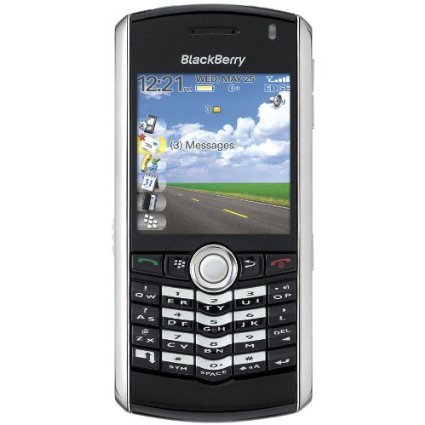
OK so it’s been a month since I bought my iPhone and jumped into mobile social media and communication hyperdrive. As a longtime Apple user and fanatic I have to say it beats my old BlackBerry device in terms of features, applications and coolness. However what I have also discovered is that AT&T’s 3G network is powerful but absent in certain situations.

My BlackBerry Pearl was a robust device that handled communication and social media tools for photos, videos and of course Twitterberry. But being able to now run TweetDeck on my iPhone allows me to scan and post from multiple accounts. Much easier than having to change users and login using a QWERTY keyboard.

Overall the iPhone does allow today’s social media geek to fully communicate to all the major social networks.  The GPS and location based networks allow you to pinpoint and track travels, trips and events in real time.  Multimedia ads are finally here with clean slick graphics and more appealing look and feel.
However all of this marketing love fest is a huge fail when you cannot get on the network.  I recently have been attending NC State football games and noticed this problem full circle.  I demonstrated to my tailgating friend the power of the iPhone by locating our exact location, taking a picture and posting to Twitter and Facebook all in a single action.
I had hoped to capture some photos during the game as well as post a few tweets.  To my dismay once I was in the stadium and the game started I could not access any network to transmit.  I tried a few times over the course of the game but nothing.  The next game I tried a few times but felt it was a lost cause, would post media after the game if I remembered.  I even saw an old roommate about a dozen rows behind me.  I tried to call him and could not get through.  The network was tied up.  #FAIL.
I managed to catch his attention the old fashion way, by waving my arms for a few minutes until I caught his attention. But now we seem to be wired to communicate first via our phones and/or social network communication.  With the iPhone I could have jumped on a Wi-Fi network and easily communicated to social networks, including sending free text messages using an app.
Not only that but there is a lost opportunity for the event management to push out communication to users that are a true captured audience.  Promotions, contests, specialized advertising and links to existing sites can all be pushed out to Wi-Fi users when accessing the network.  If it’s really done well they will further broadcast about the event to their friends, fans and other audiences and possibly talk about your cool factor.
For all the hype that is accompanying social media today we are still tied to the network much like our old landline phones were tied to the wire.  If the technology does not deliver at the expected level, the user tends to lose interest and move on.  For mobile marketing to truly work, network bandwidth has to accommodate you plus 60,000 of your closest friends!

Bookmark and Share

No Newspaper, Now What?

2 comments Written on May 11th, 2009 by
Categories: Digital Media, Marketing, PR

After being a daily newspaper subscriber, working in public relations for several years, and being an avid reader all my life, I stopped subscribing to my local paper a few months ago. It was a tough decision made easier by the declining quality and quantity of my local paper, The Raleigh News and Observer.

I fought it as long as I could. I watched the paper cut and cut the newsprint down more each few months due to declining advertising. Then the Business section was trimmed down to two pages and buried in the Local section.

I felt sorry for the staff that had worked hard to build this paper. I remembered snubbing the paper when I was a student studying journalism, electronic media (which in the 1980′s meant TV or movies). I used to stop by DJ’s bookstore and newsstand on Hillsborough Street and buy either The Charlotte Observer or The New York Times. I figured Charlotte as a bigger city so paper had to be better. I learned that was not the case when I moved to Charlotte a few years later and had to read The Charlotte Observer on a regular basis.

I remember back in 1995 when nando.net was the first online daily newspaper. It appeared that the newspapers were on top of this web technology thing that was emerging. That was not to be the case.  Last week there was talk of bailing out the newspaper companies on talk radio. As much as I don’t want to save every dying industry in this country, I do think the newspaper will be missed if it goes away altogether.
The most likely scenario is that we’ll lose the local newspapers in the smaller markets. The larger media companies will survive due to diversification and other revenue streams. So what does it all mean?  Well for one there will be no more letters to the editor, just comments to blog posts.  Will we lose the investigative journalism that uncovers abuses of power, scandals and other major stories?  Or will new communicators arise from Web 2.0 technology and we’ll just have to search for the right keywords?  Will we trust these new sources of information as we trusted our newspapers?

Bookmark and Share

Telling a Great Story with Data

No Comments » Written on November 10th, 2008 by
Categories: Marketing

Proving facts to management is always a difficult task. During our October meeting Susan Moore and Elissa Fink demonstrated their technique for telling a great story with data that can help you communicate the important facts in a memorable way. We have all faced the challenge of having too much information and data that our key points can get lost in all the data. In order to make an impact that will travel beyond your presentation or meeting, you have to bring the facts and data to life.

Susan Moore, whose global work and results were published in the book, Wake Me Up When the Data is Over, has held senior management positions with Microsoft and Eastman. Elissa Fink is the Senior Vice President of Tableau Software. Together, these two dynamic business leaders addressed the fundamental shift in how we see and process data.

In order to capture your audience’s attention it’s important to relate the data and your analysis to a story. This is similar to the public speaking tactic of starting your speech with an anecdote to warm up the audiences. But there is more to the strategy in that the story has several benefits. By telling a story you create sense and order to help the audience understand better. Storytelling also sees the whole where there are disparate parts and gives vision to what the future can look like. Also a story is interactive and allows people t put themselves into the story for a more personal connection.

So what makes a good story? First, a good story involves characters and a challenge that is believable. It’s important for the audience to accept the premise of your story as well as identify with the character. A good story must also have hurdles to overcome that further define the challenge in realistic parts. And finally the story’s outcome or prognosis must be clear. A confusing ending can derail the important points you are communicating.

Moore and Fink recommended avoiding stare glare from your audience by limiting your presentation to 10 slides with extra supporting data being included in an appendage for further reading and reference. It’s important to quickly capture executives’ attention therefore the third or fourth slide should be your money slide. It’s important for a story to have emotion as well. An example presented was Apple’s “Think Different” campaign and specifically Apple’s home page when Rosa Parks died. The image, shown below, tells of Park’s role in the civil rights movement and even has her looking away, in a different direction.

Apple Think Different Campaign

Often presenting data does not equal a good story. There is too much data already competing for eyes and ears. How does this happen? Usually because we create the presentation before we create the story. At the end of your presentation which will be more memorable the presentation or the story? Moore and Fink suggested doing a data dump and exploration of the data to uncover the findings. These are the “A-ha” and “So what” facts. Next you must determine what you want people to do as a result of your presentation. Once you have these story elements it’s time to write out a storyboard for the audience. The more senior the audience the fewer the slides to keep them focused on your story.

Authenticity is important in a story and will help make it flow. Consequently you should ask the question, “what makes it believable?” Start with a metaphor, urban legend or anecdote. Develop the story with data, authenticity is rooted in the faces and the facts are rooted in your data. Supplement hard data with qualitative data such as competitors’ ads, videos or emails from customers.

Moreover it’s important to be visual in your presentation. You are the film editor and can use this to your advantage when communicating bad news such as poor performance. Avoid the “shoot the messenger” problem by diffusing anger with a clever visual. In times of bad news the most important task becomes “what are we going to do?” Another example shown as that of a tree map. This type of graphic shows the landscape with the ability to drill-down to the underlying data. Dynamic mouseovers can be added to highlight important callout text and facts.

The strategy is also helpful for the presentation’s executive summary. Rather than just listing bullets, show the data points and make it easy to recall. For example if one of your key points is to show significant sales growth in the Western region, show the growth on a bar chart comparing to other regions and even include different measures such as percentage growth. But keep it easy for yourself and audience to recall.

To further engage the audience and make your story more memorable it’s vital to invite discussion and interact with the audience. A key tactic is once you identify yourself, share something about yourself. Limit it to three key points on crafting your story and focus on highlighting what the audience needs. to continue the discussion invite the audience to interact through blogs, intranets or discussion boards.

Be ready for the interactivity you’ve prompted. You will need to have creative ways to access and interact with the data. Anticipate questions and if possible be “real-time” with the data so you can support your answers. Access to real-time data with a dynamic reporting tool allows you to demonstrate real-time examples as well. Elissa Fink demonstrated a few examples using her company’s software reporting tool in a very dynamic fashion.

Some other guidance from the speakers included taking a film class at your local community college to hone your storytelling and storyboarding skills. Other resources include the National Storytelling website, Perceptual Edge and Garr Reynolds’ book Presentation Zen and blog of the same name.

For additional information, web site links and examples, you can download the presentation from the event page on http://www.triangleama.org/.

Bookmark and Share